Discover how long Invisalign treatment takes for adults, how 3D scanning works, and why digital planning makes orthodontic treatment more accurate and predictable.
Why Are More Adults Choosing Invisalign?
A few years ago, many people ruled out orthodontic treatment for one simple reason: they did not want to wear visible metal braces in their professional or personal lives. Today, that situation has changed.
According to data from the American Association of Orthodontists, more than 30% of orthodontic patients are adults. Demand has grown particularly among people between 35 and 50 years old who are looking for a discreet, comfortable solution that fits easily into meetings, work, and social life.
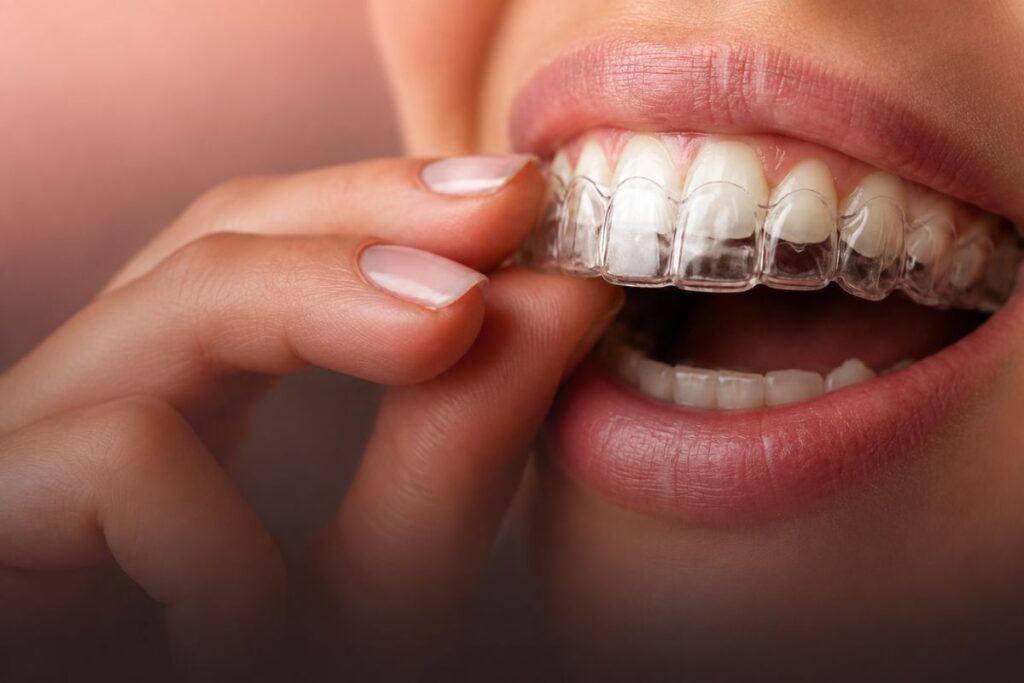
Invisalign has become one of the most popular options because it combines aesthetics with advanced digital planning. The clear aligners are virtually invisible and are custom-made for each patient.
In addition, modern treatments are much more predictable than they were ten years ago thanks to technologies such as:
3D intraoral scanning
Digital simulation of tooth movement
Artificial intelligence applied to orthodontics
Precise planning of each treatment phase
For many adults, the most important advantage is psychological: knowing from the beginning what their smile is expected to look like and approximately how long treatment will take.
How Long Does Invisalign Really Take for Adults?
One of the most common questions in the dental office is straightforward:
“How long will I need to wear aligners?”
The answer depends on each individual case, but today treatment times can be estimated much more accurately thanks to digital planning.
Average Treatment Time for Adults
| Type of case | Approximate duration |
|---|
| Mild corrections | 6–8 months |
| Moderate crowding | 12–18 months |
| Complex bite problems | 18–24 months |
| Minor aesthetic refinements | 4–6 months |
Most adults fall within the 12–18 month range. However, there is an important point to consider: many patients begin to notice visible changes within just 8–12 weeks.
Why Do Some Treatments Take Longer?
Several factors can influence treatment duration:
Degree of dental crowding
Type of bite
Compliance with aligner wear
Gum health
Need for complex tooth movements
Invisalign requires patients to wear their aligners for approximately 20–22 hours per day. When patients do not follow this routine, treatment may become less predictable and can take several additional months.
How 3D Technology Makes Treatment More Precise
The real revolution in modern orthodontics is not simply the use of clear aligners. It is the ability to digitally plan every tooth movement before treatment begins.
At advanced dental clinics such as Clínica Blasi, 3D intraoral scanning replaces traditional, uncomfortable dental impressions.
What Exactly Does a 3D Scanner Do?
The scanner captures thousands of images per second and creates an accurate digital replica of your mouth.
This makes it possible to:
Analyse the actual position of each tooth
Detect small deviations that may not be visible to the naked eye
Design precise tooth movements
Simulate the final result
Estimate treatment time
The major advantage is predictability.
In the past, patients started orthodontic treatment without knowing exactly how their teeth would progress. Today, they can view a digital simulation of their future smile from their very first visit.
Real Benefits for Adult Patients
Adults often want reassurance and control before starting orthodontic treatment.
3D technology provides precisely that:
| Traditional technology | Digital 3D planning |
|---|
| Uncomfortable physical impressions | Fast and comfortable scanning |
| Approximate estimates | Precise digital simulation |
| Less visual control | Results can be visualised before treatment |
| Less predictable adjustments | Planned tooth movements |
| Longer appointments | Optimised follow-up |
Millions of patients worldwide have already been treated with clear aligners.
What Factors Influence Treatment Duration?
Two people of the same age can have completely different treatment times.
Age has less influence than many people think. What really matters is the initial condition of the mouth.
Factors That Can Speed Up or Slow Down Invisalign Treatment
1. Daily Compliance
This is the most important factor.
Patients who wear their aligners correctly are generally able to follow the planned treatment timeline with a high degree of accuracy.
2. Type of Tooth Movement
Moving a slightly tilted tooth can be relatively quick. Correcting a deep bite requires more time.
3. Periodontal Health
Healthy gums respond better to orthodontic tooth movement.
4. Regular Check-Ups
Regular appointments allow small deviations to be detected before they can delay treatment.
5. Case Complexity
Closing a few small spaces is not the same as reorganising the entire bite.
Invisalign vs. Traditional Braces
Many adults are unsure whether to choose clear aligners or traditional braces.
The difference is no longer purely aesthetic.
Practical Comparison
| Feature | Invisalign | Metal Braces |
|---|
| Aesthetics | Highly discreet | Visible |
| Comfort | High | Moderate |
| Dental hygiene | Easier | More difficult |
| Digital technology | Highly advanced | Limited |
| Visual treatment planning | Yes | Partial |
| Check-ups | Usually shorter | More frequent |
| Eating | No restrictions | Some limitations |
| Oral irritation | Lower | Higher |
For adult patients, discretion and comfort are often decisive factors.
However, no orthodontic system is superior in every case. The most appropriate treatment depends on each patient’s clinical situation and should always be assessed individually.
What Is the Digital Treatment Process Like, Step by Step?
Technology has greatly simplified the patient experience.
1. 3D Scanning
The specialist captures a complete digital image of the mouth within just a few minutes.
2. Bite Analysis
The software analyses tooth positions, the way the teeth fit together, and the movements required.
3. Visualise the Simulation
The patient can see how their smile is expected to look before treatment begins.
4. Design the Aligners
Each aligner applies specific, progressive tooth movements.
5. Change Aligners Periodically
Aligners are usually changed every 7 or 14 days.
6. Monitor Progress
Regular check-ups confirm that treatment is progressing according to the planned sequence.
Mistakes That Can Prolong Treatment
Most treatment delays are related to everyday habits.
Not Wearing the Aligners for Enough Hours
Wearing aligners for fewer than 20 hours a day can reduce the effectiveness of tooth movement.
Missing Check-Ups
Small adjustments are essential to maintain treatment accuracy.
Storing Aligners Incorrectly
Many patients lose their aligners while eating or travelling.
Poor Oral Hygiene
Gum inflammation can affect orthodontic treatment.
Changing Aligners Too Early
Each treatment phase needs to be completed correctly before moving on to the next one.